
During lockdown we have had lots of calls about shoulder pain what can cause it and how can it be fixed.
Shoulder pain is a very common complaint and a lot of clients just want answers to what causes it and what can you do about it.
Almost 60% of the population will experience shoulder pain during their lifetime and the chance of this increases with age. According to European research shoulder pain can have the same impact on someone’s life as heart disease or diabetes.
The shoulder is a complex joint and has an impact on other areas as movement, as shoulder pain can often cause normal movement patterns to alter greatly so when treating a shoulder the lower back is often the starting point.
There are 26 muscles that affect the shoulder which is made up for 4 joints, in addition there are many planes of movement to consider when trying to isolate the issue from the symptoms, In addition if any one of these become an issue the body adapts before showing pain, which can also hinder correct treatment.
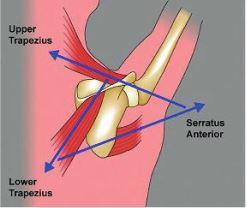
The three main issues we are presented with are as follows;
- Subacromial Pain Syndrome
- Rotator cuff tendinopathy
- Frozen shoulder syndrome
What is Subacromial Pain Syndrome?
Subacromial Pain Syndrome can be caused by a swollen bursa in the subacromial space or by a damaged rotator cuff tendon, normally the supraspinatus.
There are 6-12 bursa in the shoulder which help to reduce friction, if you imagine plastic bags rubbing together, so if one is inflamed it will cause pain.
As the subacromial space is so small, any movement above 90 degrees will cause the space to reduce further, especially considering the amount of tendons and ligaments sharing the space.
What is rotator cuff tendinopothy?
This is the most commonly diagnosed shoulder issue with the supraspinatus often the culprit.
The main symptoms are shoulder pain and weakness which is felt during lifting the arm or externally rotating the arm. This may start as a result of a specific incident or just through degeneration, but because of the weakness the joint may drop as it is lifted up and to the side.
A typical client would be a person over the age of 40 with a sudden onset of pain and weakness which cause pain during the night whilst sleeping. Movement is possible passively, but when placed underload weakness and discomfort is felt.
Whilst MRI and ultrasound can help with diagnosis of this condition it is also worth noting that in the region of 96% of the population over 70 generally have the condition silently (Frost et all 99) however symptoms only present in a small number of these, so the exact trigger is not known.
What is Frozen shoulder syndrome?
The affects around 5% of the general population, but the majority of sufferers will be ladies between the age of 50-60.
The pain suffered is severe, draining and often prolonged for up to 30 months.
Frozen shoulder goes through three distinct stages; freezing – frozen – thawing
How is shoulder pain treated?
In some cases the only outcome is to have an operation, unfortunately this is a fact of life as over time our bodies do degenerate and wear out. However before surgery is confirmed we would always recommend a series of manual therapies such as massage and trigger point therapy as a study at Addenbrookes found that in some cases surgery can be avoided and in healthy joints increased strength and power can be made.
We hope this post gives you more of an idea about shoulder pain what can cause it and some options for you.
If you are suffering from shoulder pain and would like an assessment please get in touch.