Can Thai massage helps to reduce headaches and migraine?
Thai massage is an ancient therapeutic healing practice, the massage itself combines deep compressions and gentle stretching and movements to give relaxation to the full body, it can alleviate ailments such as common headaches, tension headaches and migraines.
How does it work?
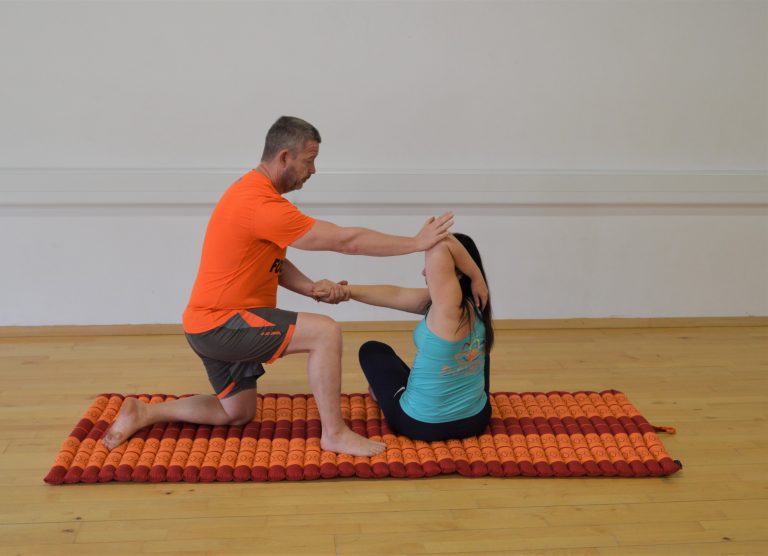
Thai massage is an active whole body massage where you will move and participate with the support and connection of your practitioner who will help slowly move your body through stretches and adjustments.
During sessions for headache or migraine, your Thai Bodywork practitioner will apply pressure on the Sen pathways causing the blockage. Using pressure along these pathways results in them opening and releasing the energy flow more consistently around the body.
Although the whole body is massaged a major focus will be to remove tension and tightness in muscles around the shoulders and neck as this area can cause headaches and are often blocked. Your massage practitioner will use their hands, feel, elbows to work the whole area, leaving you with a feeling of lightness afterwards.
What is the science behind this?
Results of a 2015 study from the National Institute of Health into the effects of traditional Thai massage on sufferers of chronic tension headaches have been published, revealing positive results.
Tension headaches are the most common type of headache – coming with mild to severe pain, and generally classified into ‘episodic’ and ‘chronic’. This latest study (carried out at the Bamnet Narong Hospital in Chaiyaphum Province, Thailand) focused on treating chronic tension headache sufferers. Patients are ordinarily prescribed acetaminophen, aspirin, or nonsteroidal anti-inflammatories to treat such headaches.
In this study, sixty patients were divided into two groups. The treatment group received a 45 minute traditional Thai massage twice per week for 4 weeks. The other group (the control group) was prescribed amitriptyline over the same period. Outcome measures were evaluated in weeks 2, 4 and followed up in week 6.
The main outcome measures examined were pain, tissue hardness, pressure pain threshold, and heart rate variability. The results showed a statistically significant decrease in headache pain intensity for the group receiving Thai massage at different assessment time points and a statistically significant difference between the Thai massage group and the control group at each assessment time point. The superiority of massage over amitriptyline was also identified for other variables. As for tissue hardness, the value for the Thai massage group was significantly lower than that of the control group at week 4. Additionally, the pressure pain threshold of the group receiving massage increased significantly and was significantly higher than that of the control group. These results were consistent with a 2014 study into the effects of Thai traditional massage on headache and migraine sufferers.
What to expect?
Unlike other massages, oil isn’t required and your muscles typically aren’t heavily kneaded. Some of the stretches will involve going through movements with the practitioner holding or pulling you to maintain a pose, in others you may just feel pressure being applied for a short duration.
If you want to find out more about the therapeutic benefits of Thai Massage take a look at this brief post.
If you want to find out more about the therapeutic benefits of Thai Bodywork, please get in contact.
Or if you are ready to book an appointment, just hit this link to our online booking system.
If you have an injury, or any part of your body is particularly sensitive to pain, be sure to let the massage practitioner know before they start the treatment.